


Vladimir Shadrikov
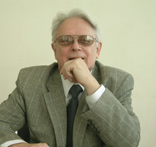
Vladimir Shadrikov is one of the most outstanding Russian psychologists, a leader of Yaroslavl School of Psychology, Deputy Minister of Education of the Russian Federation
Vladimir Shadrikov was born on November 18th, 1939 in Rybinsk. After graduating from the school he entered Ushinsky Yaroslavl State Pedagogical Institute. At university he took an interest in scientific research. He was a chairman of Scientific Student Council of the Institute, worked in Magadan region as a teacher, director of a secondary school, and an inspector of district education department. He had pursued postgraduate studies at Yaroslavl Pedagogical Institute since 1965 and defended Ph.D. dissertation on Signal programming and optimization of information transmission to the operator.
Under the auspices of Vladimir Shadrikov a programme of research projects on systemogenesis of professional activity was implemented at Yaroslavl State University. Basing on experimental results, he developed a new theory of professional education and presented it in his doctoral dissertation on Systematic approach in psychology of industrial training (1977). Shadrikov detected peculiarities of systemogenesis of the activity among which there are nonadditivity of structural components of the system, efficiency, heterochronism and sufficiency of their development.
His name is associated with the main stages of establishment of the Psychology Department of Yaroslavl State University and its transformation into the third most popular psychological educational institution in the country. He worked for a long time as a dean of Psychology Department, Head of Engineering Psychology and Labour Psychology Department, and a deputy rector of the university. In 1982 he was appointed the rector of Ushinsky Yaroslavl State Pedagogical University within which he implemented scientific research programmes devoted to the development of methods of psychological diagnostics of abilities, interests, significant characteristics in terms of professional area, theoretical and methodic basics of professional psychological consultation. Shadrikov suggested to view giftedness and talent as properties of functional systems which are expressed to a particular extent manifesting itself as a success or qualitative peculiarities of acquisition and implementation of activity.
Shadrikov proved by experiment that giftedness and talent are developed through the change in functional and operational mechanisms. A specific place in the development of giftedness and abilities is taken by formation of efficiency of operational mechanisms. This process is a basis for the development of professional abilities from general abilities and giftedness.
Basing on the theoretical statements on the giftedness and abilities he suggested general principles of diagnostics of abilities and a technique for diagnostics of «mnemic» abilities that he defines as a technique for development of a mnemic activity.
In 1996 Shadrikov was awarded a prize of Rubinshtein by Russian Academy of Sciences for the series of scientific works on psychology of abilities including the following monographies: «Psychology of industrial training» (Yaroslavl, 1974), «Problems of systemogenesis of professional activity» (M, 1982), «Cognitive processes and abilities in training: textbook» (M, 1990), «Development and diagnostics of abilities» (editor V. Druzhinin, V. Shadrikov, M, 2991 ), «Activity and abilities» (M, 1994), «Philosophy of education and educational politics» (M, 1993).
Shadrikov introduced a term «inward abilities» to a modern psychology, revealed its meaning, determined a place of inward abilities in the system of intellectual characteristics of a human being, and showed that the development of the abilities passes through a triple determination: first —environment of development, second — demands of activity, third — individual meanings and values.
Shadrikov published the following monographies on this topic:
«Individualization of the education content» (M, 1997), «Abilities and activity» (M, 1998), «Inward abilities» (M, 1998), «The origin of humanness» (M, 1999).
V. Shadrikov, a scientific advisor and one of the authors of Russian theory of creativeness and giftedness, is a Chairman of Coordinating Council of the Presidential Programme «Children of Russia» within which working definition of giftedness was created. He takes part in developing and publishing a series of «Odarennye Deti» («Gifted Children») books comprising 13 books. One of the books of this library, «Basic modern concepts of creativeness and giftedness» (M.: Molodaya gvardiya, 1997), presents the first full theoretical review of approaches to analysis of creativeness and giftedness. The book is opened with Shadrikov’s introductory note titled as «Human abilities». In 1999 the authors and developers of «Odarennye Deti» («Gifted Children») programme were awarded a prize of the President of the Russian Federation in education.
Vladimir Shadrikov is a scientist, organiser and populariser of psychological science. He is capable of uniting like-minded people and students attracting them with his creative energy, ambitious plans and ideas. Shadrikov is a member of editorial boards at the leading publications and magazines and a member of Council of Experts at Otkrytoe obschestvo (Open Society) Institute, head of the department dealing with giftedness issues at the Russian Academy of Science. Shadrikov is a man of principle in scientific discussions, he is demanding of himself and others. Among his students there are more than 40 Ph.D. and 10 Doctors of Science. For many people the time spent in discussions with him is a true school of scientific research culture, main components of which are independent scientific search, literacy, and scientific ethics in presentation of results.
